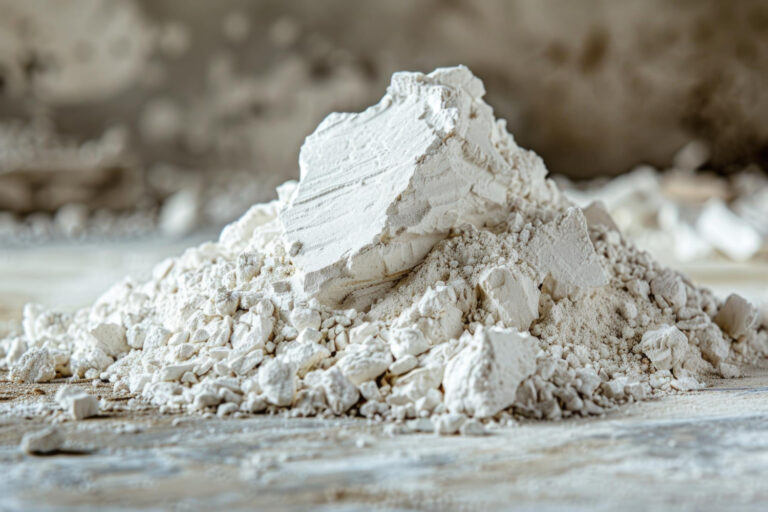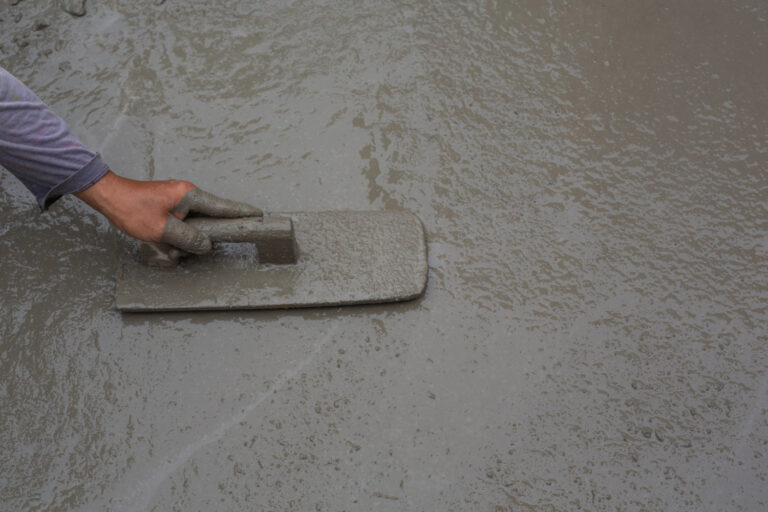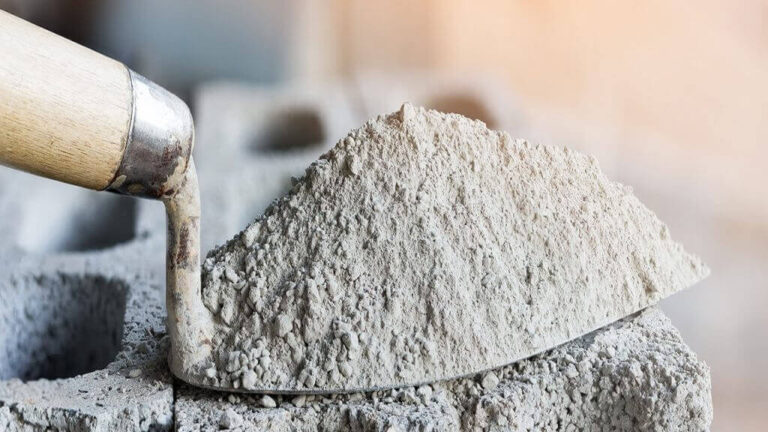
The water–cement ratio (W/C) is one of the most critical factors in determining concrete quality, strength, and durability. It directly affects strength, durability, workability, and permeability. When cement and water are combined, a paste forms that coats and binds mineral aggregates. After cement, water is the most essential component in concrete production and significantly influences properties such as durability, strength, and permeability.
Role of Water in Concrete
Concrete is composed of cement, sand, fine and coarse aggregates, and other materials. To produce high-strength concrete capable of resisting external loads, the correct proportion of these materials to water must be measured accurately.
Water initiates the chemical reaction of hydration, typically requiring up to 25% of the cement volume. About 15% of the hydrated cement paste fills internal voids, increasing strength and compressive resistance.
Effect of Excess Water on Concrete
Approximately 23% water is required to initiate cement hydration. Adding more than the specified amount reduces concrete strength and negatively impacts performance.
Excess water increases fluidity, causing aggregates to settle. After evaporation, voids remain within the concrete matrix, which reduces compressive strength.
Conversely, maintaining a low water ratio to preserve strength may reduce workability and make placement and compaction more difficult.
Effect of Reducing the Water–Cement Ratio
With a lower water ratio, minimal free water remains in the formwork, reducing internal voids. After hydration, the resulting gel has limited space to migrate and settle, leading to denser deposition around cement particles and a more compact structure.
Standard Water Percentage in Concrete
The water ratio directly affects concrete quality and varies depending on structural type and environmental conditions. Standards typically recommend a W/C ratio between 0.3 and 0.8, depending on cement type, required workability, compressive strength, cement content per cubic meter, and environmental exposure.
High-Strength Concrete: Requires a low W/C ratio between 0.35 and 0.45 to increase density and strength.
Normal Concrete: Used in general construction with ratios between 0.45 and 0.6, providing a balance between strength and workability for columns, walls, foundations, and slabs.
High-Workability Concrete: For complex formwork and narrow sections, ratios may reach 0.55 to 0.65, though excessive water must be avoided to prevent strength loss.
Water Content per Cubic Meter of Concrete
Typically, one cubic meter of concrete contains 300–350 kg of cement. A practical estimation for water content is approximately half the cement weight. For example, concrete containing 350 kg of cement requires about 175 liters of water, since one liter of water equals one kilogram.
Any increase or decrease in cement content proportionally changes the required water amount. Using this simple calculation, the appropriate water content per cubic meter of concrete can be determined.