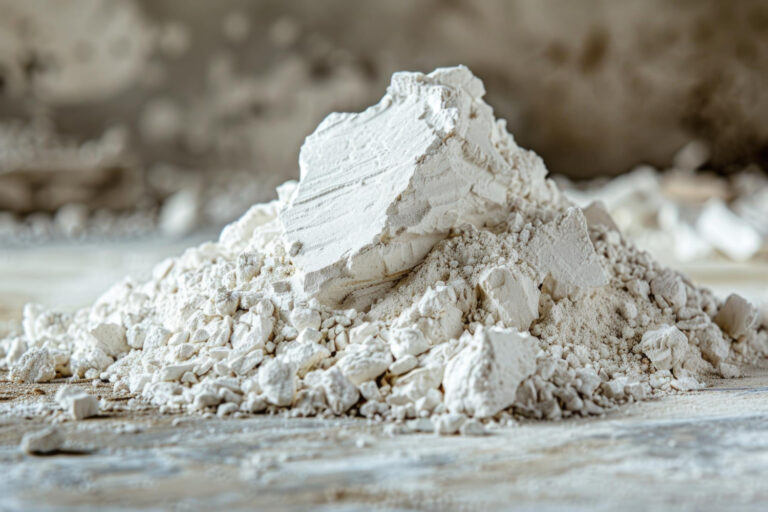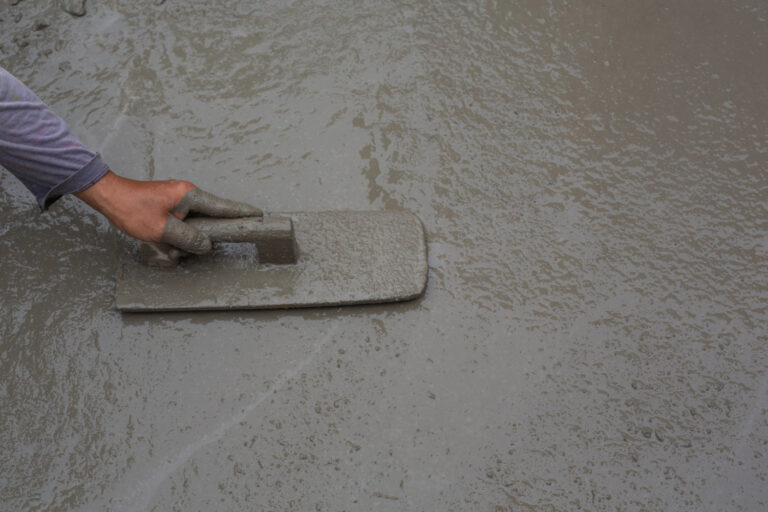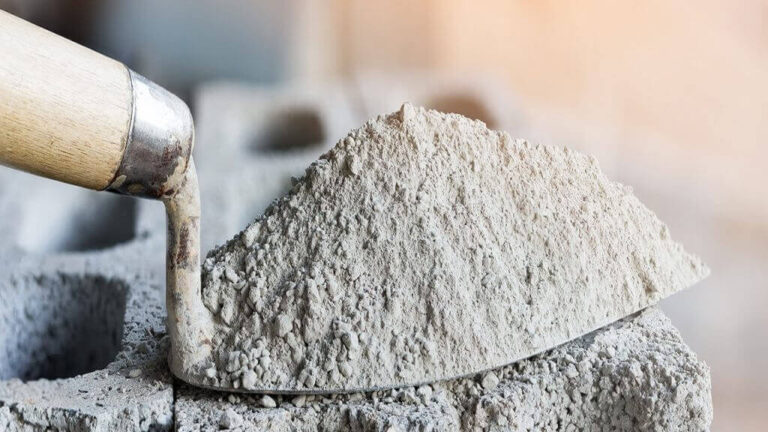
Cement is a powder produced from limestone and clay, and when mixed with other aggregates—especially sand, gravel, and stone—it is used to manufacture various mortars and concretes. The primary raw materials of cement and most cement used today are of the Portland type, commonly known as Ordinary Portland Cement (OPC). Other types also exist, mostly used in sub-surface construction works, as well as High Alumina Cement (HAC).History of the Discovery of Cement
We have all heard the term cement and used it many times. In this article, we review the history of cement’s discovery and its method of production, along with its definition.
The first recorded attempt to produce an artificial mixture of limestone and clay for cement (hydraulic lime) was carried out in France by Vicat in the early nineteenth century. He mixed limestone and clay, ground the mixture with water, and then fired the resulting slurry. Although the outcome was successful, the method was not pursued further in France.
Later in England, a bricklayer succeeded in producing a superior hydraulic lime by firing a mixture of limestone and clay—at different proportions and in slurry form—at high temperature. He named the product Portland cement and registered his invention on October 21, 1824. The name derived from its resemblance, particularly in color, to a building stone quarried on the Isle of Portland in southern England. However, this cement differed from what is known today as modern Portland cement.
His work was continued by his son, William, who in 1843 achieved higher firing temperatures and partial fusion during burning, producing a material with a greater proportion of clinker phases. Cement manufactured by William was stronger and superior to earlier versions. It was used in constructing the new Houses of Parliament in England (1840–1852).
Application of Cement in Concrete
Cement functions in concrete primarily as a binder, adhering aggregates together; by itself, it does not directly determine load-bearing capacity. High-quality concrete is identified when fractured samples show broken aggregates rather than separation at the cement paste.
Cement is fundamentally lime-based. Its principal component is calcium oxide combined with other oxides such as aluminum oxide, silicon oxide, iron oxide, magnesium oxide, and alkali oxides. Cement reacts with water and gradually hardens in air or underwater, developing strength over time.
Based on this property, cement may contain varying compositions and is classified as a hydraulic binder. Hydraulic mortars were known in ancient times. Egyptians and Greeks produced hydraulic lime by mixing lime with volcanic ash, brick dust, and water. Using similar materials, the Romans constructed massive structures, many of which remain standing thousands of years later.
Cement is typically sold in 50-kg bags, although large commercial consumers—such as ready-mix concrete plants and precast concrete factories—use bulk cement transported by specialized tankers.